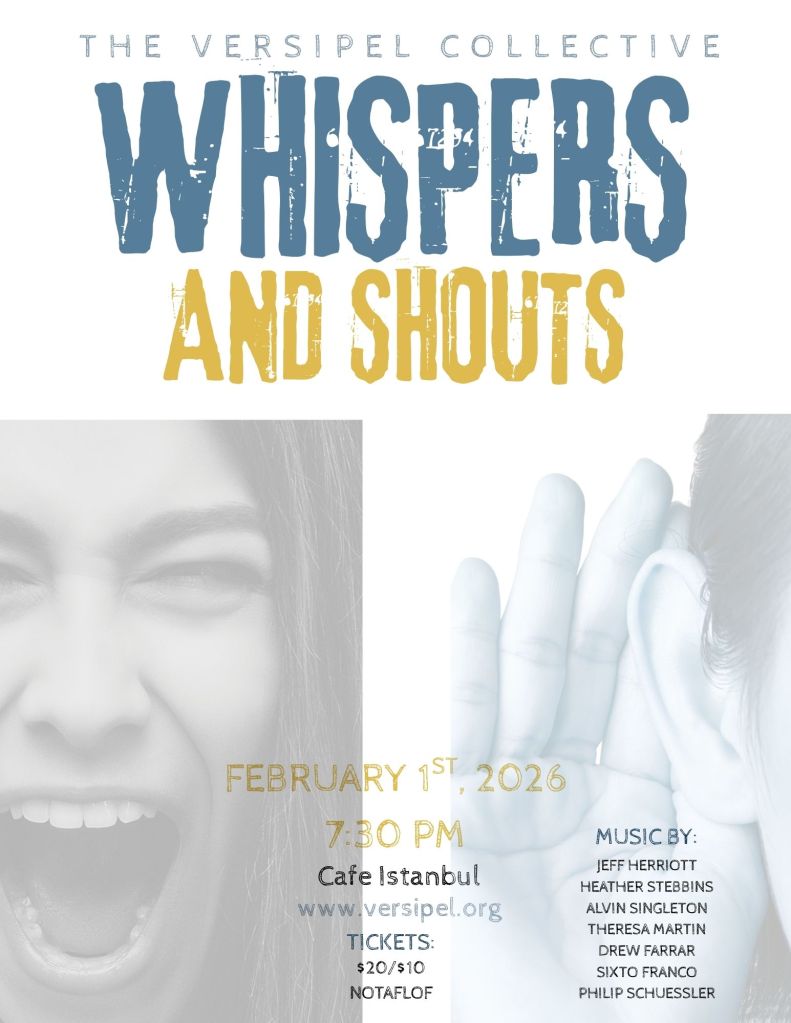
February 1, 2026
7:30 PM
Cafe Istanbul
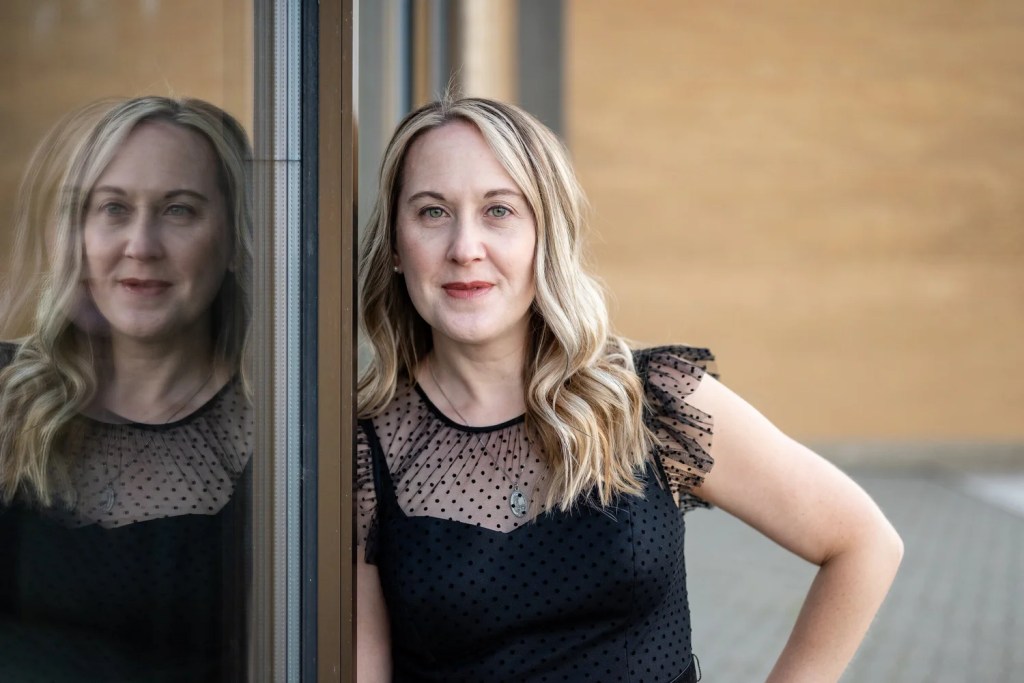
The Kauaʻi ʻōʻō (2023) by Drew Farrar
The Kauaʻi ʻōʻō is an extinct bird native to the Kaua’i island, part of the Hawaiian
archipelago. The main cause of the species extinction was habitat loss, as well as
increased occurrences of extreme weather on the island. The ʻōʻō is one of the few extinct
birds to have been recorded before their extinction, with the last recordings being from
These recordings served as a basis for this composition, as the flute mirror’s the
ʻōʻō song’s contours and spectral content. The piece examines themes of isolation,
destruction, and loss.
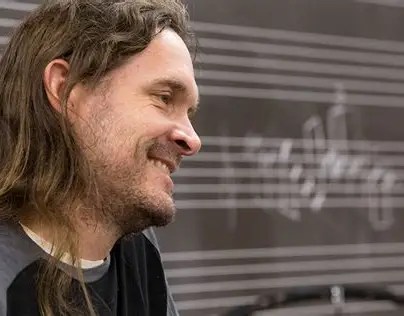
Drew Farrar is a composer, guitarist, and educator from St. Louis, Missouri, currently based in Baton Rouge, Louisiana. Farrar’s music often incorporates physical movement, quotation, and spectral techniques to explore concepts of agency and otherness. His works have been performed by RE:duo, Confluss Duo, the Illinois Modern Ensemble, and New Music Mosaic among others.
Farrar also performs regularly as a guitarist with performances at Electric LaTex, Summit for Adventurous Guitar in the Gulf South, CHIMEfest, New Music on the Point, and the 21st Century Guitar Festival. An avid improviser, he has performed with Renee Baker, Adam Shead’s Adiaphora Orchestra, the Avant-Gardians and Illinois Improvisors Exchange.
In 2020 Farrar co-founded New Music Mosaic where he currently serves as Director. He also serves as co-host alongside Stephen Caldwell of New Music Mosaic’s Mosaic Reviewcast a monthly review podcast. For more information about New Music Mosaic please visit our website!
Farrar received his M.M. in composition at the University of Illinois at Urbana-Champaign, where he studied with Dr.s Rick Taube, Erik Lund, Kerrith Livengood, and Carlos Carrillo. He received his M.M. in Guitar Performance from the University of Illinois at Urbana-Champaign where he studied with Dr. Guido Sanchez-Portuguez. He is currently pursuing a Ph.D. in Composition at Louisiana State University where he has studied with Dr.s Mara Gibson, Jesse Allison, Christopher Trapani, and D.J. Sparr.
Current research interests include otherness, guitar effects pedals, spectralism, computer assisted composition, and interactive sound installations.
Gryphon (2006) by Theresa Martin
While composing the opening gesture of Gryphon, my mind envisioned a magnificent
creature possessing a magical and seductive aura standing proudly on the cliffs of an
ocean. He is wild and quick-tempered, yet he can be surprisingly calm and gentle at
times. Gryphon seemed an appropriate title for this piece because it really portrays the
characteristics I imagine this mythical beast would have. Physically, a gryphon is
commonly depicted as having the head, wings, and talons of an eagle, the body of a lion,
and in some cases, the tail of a snake. According to legends, the gryphon is blessed with
the speed, flight, and penetrating vision of the eagle, and the strength, courage and
majesty of the lion.
Theresa Martin (b. 1979) is an internationally renowned contemporary composer of orchestral, band, and chamber music who holds a doctorate in Music Composition from the University of Michigan and whose works have been performed at conferences and recitals worldwide and are available on several recordings. She has composed a large catalogue of works for the clarinet, and in a recent online article, she was named one of history’s top 100 female clarinetists. Among her many beloved works, “City of Ambition,” for wind ensemble and “Gryphon” for solo clarinet are quickly becoming a standards in the repertoire. She freelances as a performer, publisher, private teacher, and guest composer, and currently serves as the Wisconsin State Chair of the International Clarinet Association. When not composing or performing, she enjoys traveling, reading, being active outdoors, and spending time with her husband, son, daughter and two cats.
Iris Fulva (2024) by Philip Schuessler
This work, written for Kari Besharse, is the second in a series of works written for
and dedicated to musicians and artists based in Louisiana – a state rich with
visionary musical voices. These works celebrate these voices by featuring their
talents in multiple ways. The Book of Irises is a subset within the larger series
that are titled after the five native species (and two variants) of Louisiana irises.
Philip Schuessler’s music, ranging from soloists to orchestra, often has sense of delicate urgency and rhythmic energy that is characterized by intricate instrumental writing and subtle timbral design. He takes inspiration from a variety of sources, including popular and rock music traditions, experimental improvisation, spectralism, natural and scientific processes, and countercultural political theater.
Many world-renowned artists and ensembles have championed his music over the years. These include such artists as Bergamot String Quartet, Yarn/Wire, Loadbang, Hypercube, Unheard-of//Ensemble, Mantra Percussion Ensemble, Dither Guitar Quartet, Pesedjet, Iktus Percussion, violinist Graeme Jennings, cellist Craig Hultgren, pianist Mabel Kwan, and soprano Tony Arnold.
He is currently an instructor of music theory and composition at Southeastern Louisiana University where he was honored with the President’s Award in Artistic Excellence. His music is published by his own Pendula Music publishing company, as well as Society of Composers, Inc., Alea Publishing, T.U.X. People’s Music, Murphy Music Press, and Potenza Music, and recordings of his compositions can be found on the Aucourant, New Focus, Centaur, Navona, Janus, Curvepoint Media, and Capstone labels. Most recently Glow in the Dark Valu-Pak, an album of psychedelic-tinged synth music, was released on Bandcamp.
In addition to being a composer and teacher, Schuessler is also assistant director, co-founder, pianist, and conductor for Versipel New Music. Based in New Orleans and now in its tenth year, Versipel presents contemporary music concerts throughout the southern Louisiana region.
Trio (2003 rev. 2011) by Jeff Herriot
My process of composition focuses almost exclusively on form. I find all kinds of sounds
beautiful, whether or not they might be considered as such by others. Though I’m more
comfortable working with certain gestures and sounds than others, I’m convinced of the
idea that, if placed within the proper formal structure, any musical material can form the
basis of a successful composition. I focus then on finding that structure, struggling not
just to find one that works but rather what I consider to be the precise proportions.
Unfortunately, it seems that my opinions about those “perfect” proportions change every
day. The original Trio, for violin, piano, and percussion (plus electronics), was
commissioned by Arraymusic and premiered in Toronto as part of the SCRATCH! 2
Festival in January of 2004. This arrangement, for which a variable ensemble expands
upon the original electronics part, was inspired by a particularly electronic-sounding
cello performance by Franklin Cox.
COMPOSING IS THE WAY I explore the imagination, my way to invent and share delicate aural spaces.
I am particularly attracted to sounds that shift and bend at the edges of perception. I create unhurried music, using slow-moving shapes and a free sense of time. My works often explore repetition with subtle variations in gestural pace, instrumental character, and tuning. I hope to craft personal, intimate music that invites listeners to focus on momentary details while a larger structure unfolds in ways that they may not quite grasp. I employ electronics extensively in my work, as technology allows me to alter instrumental timbres and shift tunings by tiny amounts – changes that listeners may not actively perceive but which can foster a sense of uncertainty and wonderment.
My compositions have been described as “colorful…darkly atmospheric” (New York Times), “hypnotic” (mainlypiano.com), and “incredibly soft, beautiful, and delicate” (Computer Music Journal).
I am active as a collaborator in a range of musical styles, including with my sleepy rock/ ambient project Bell Monks; with the heavy metal band Realmbuilder; with the noise duo Mindscrubber; with synth-duo Binary Reptile; as a laptop composer/ improviser with Skewed and Such and Sonict; and as co-composer with S. Craig Zahler for the music and songs in his films, Bone Tomahawk, Brawl In Cell Block 99, and Dragged Across Concrete.
Jasper Drag (2000) by Alvin Singleton
Jasper Drag was commissioned by Michigan State University and the Phillips Collection
for the Verdehr Trio. The work is scored for clarinet, piano, and violin. The title refers to the June 7, 1998 Jasper, Texas incident, wherein three white men dragged a black man
to his death after chaining him to the back of a pickup truck. The composer writes, “This
composition is not intended to tell a story, or even to evoke images. Jasper Drag is meant
to be a marker on the collective memory of a nation still growing. The score is inscribed
to the memory of James Byrd, Jr., the victim of this racially motivated act.”
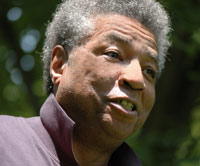
Alvin Singleton was born in Brooklyn, New York and attended New York University and Yale. As a Fulbright Scholar, he studied with Goffredo Petrassi at Accademia Nazionale di Santa Cecilia in Rome, Italy. After living and working in Europe for fourteen years, Singleton returned to the United States to become Composer-in-Residence with the Atlanta Symphony Orchestra (1985-88). He subsequently served as Resident Composer at Spelman College in Atlanta (1988-91), as UNISYS Composer-in-Residence with the Detroit Symphony Orchestra (1996-97), and was the 2002–03 Composer-in-Residence with the Ritz Chamber Players of Jacksonville, Florida. In addition, he has served as Visiting Professor of Composition at the Yale University School of Music.
Singleton has amassed numerous awards throughout his compositional life. He is the recipient of a 2003 Guggenheim Fellowship and was commissioned by The Serge Koussevitsky Music Foundation and American Composers Orchestra for the orchestral work When Given a Choice, which premiered at Carnegie Hall in April 2004. His other awards include the Kranichsteiner Musikpreis by the City of Darmstadt, Germany, twice the Musikprotokoll Kompositionpreis by the Austrian Radio, the Mayor’s Fellowship in the Arts Award by the City of Atlanta, and a grant from the National Endowment for the Arts. Also in Spring 2004, Singleton joined the American Composers Orchestra as “Music Alive” Composer-in-Residence and Artistic Advisor for the IMPROVISE! Festival. His music has been published exclusively worldwide by Schott Music since 1977, and is recorded on the Albany Records, Elektra/Nonesuch, First Edition, Tzadik, and Innova labels.
The Sky Has No Color (2020) by Sixto Franco
If two people are asked: “What color is the sky?” at the same time and location, the
answers will vary form person to person. The title reflects the disparities of those
answers and points out that if color is subjective, then, what really is what each
individual sees? The physics of light and the science that studies it will be as precise as
humanly possible to define the process through which light is reflected in the
atmosphere and its refraction. Vision science and neurology will be as precise at
explaining why we see shades of blue in a clear sky during the day. However, when
describing what we see, we fall into a whole other system of variants that include
Language, culture, education, and even state of mind at that moment. The Sky Has No
Color is an attempt to engage the audience in a free and creative interpretation of the
sounds we hear.
The Sky Has No Color came to existence as I was approaching a workshop at Northwood
Middle School, near the city of Chicago. This workshop presented itself as the perfect
opportunity to engage with young musicians from a performer-composer prospective. I
wanted to make an effort to incentive youth to create, to find how to express what they
feel and to open up to improvisation as a way to grow artistically. This piece has been
evolving as it has been shared with very different populations, and every time I perform
it in whole or just parts of it, bares my most sincere intentions of encouraging my
listeners to find their creative side. “If he can do it, maybe I also can”
A shout out to the students form Northwood Middle School for their kind words of
appreciation.
My deepest thanks to violist and dear friend Raquel Lopez Bolivar for helping me shape
this work.
An active member of the Louisiana Philharmonic Orchestra, Sixto Franco is a violist, composer, improviser, teacher and a performing arts enthusiast. He is enjoying an active career in the musical arts, having concertized in Europe, United States, Mexico and Uruguay. Sixto is also the founder of the Quijote Duo, a viola and cello formation that strives to create new spaces that promote creative collaborations.Sixto Franco is passionate about chamber music and has had the honor to perform with Eighth Black Bird Ensemble, International Chamber Artists, Symbiosis Ensemble in L.A., Music of the Americas Project, the Chicago Ensemble, the Chicago Chamber Music Festival, Gesher Music Festival in St. Louis, MO, and the Versipel Ensemble in New Orleans.
The creative side of Sixto Franco has led him to venture into composition. He has written music for different mediums such as chamber music, theater and dance. He made his debut on February 2011 premiering his work “Blanco y Negro” in a Cancer Benefit Concert promoted by the Spanish Consulate in Los Angeles. The “malArte Association” of Valencia, Spain, premiered his piece Five “O’clock Tabu” as the soundtrack for the interdisciplinary work with the same title. His latest commissions include Tulane University’s production of the theater play The Jane Project.
At the Wind’s Hand (2016) by Heather Stebbins
At the Wind’s Hand was composed as I was in the midst of caring for my infant son. It is
a whisper and a yell, joy and exhaustion. ATWH was written graciously for Nebula
Ensemble.
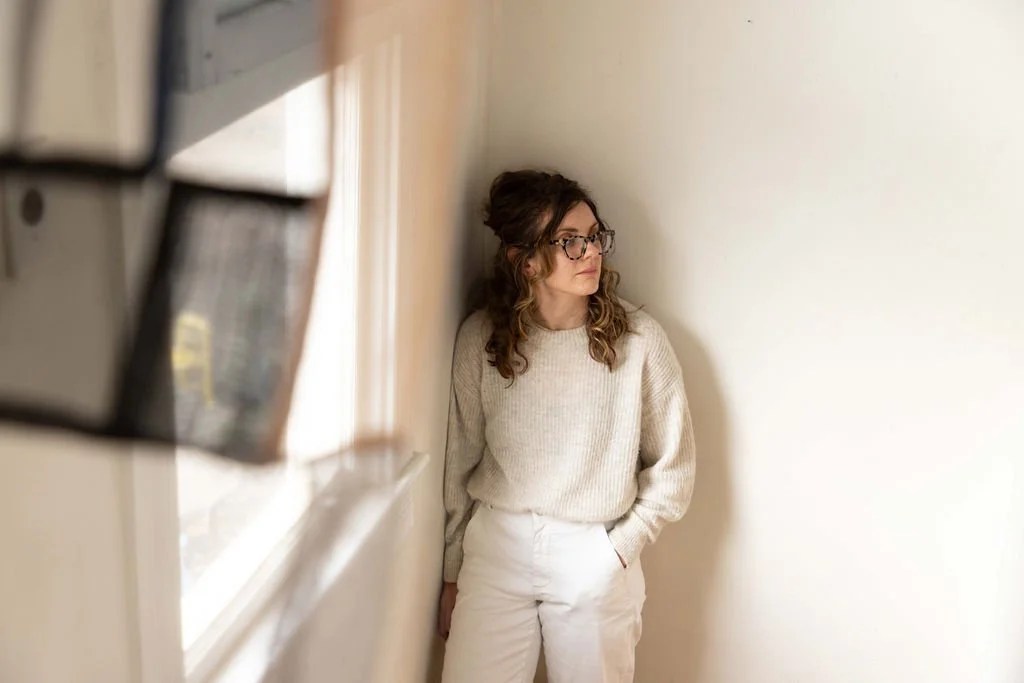
Heather Stebbins is a composer of acoustic and electroacoustic music that highlights her fascination with the kinetic and emotive properties of sound. Her music has been performed in North America, South America, Australia, Asia, and Europe by ensembles such as loadbang, Ensemble U:, the JACK Quartet, Dal Niente, Sound Icon, Transient Canvas, Ensemble L’Arsenale, eighth blackbird, and the Riot Ensemble. She has worked closely with performers Carlos Cordeiro, Will Lang, Andrew Kozar, Adam Vidiksis, and Sam Kelder to create highly personal pieces for solo instrument and electronics.
“You Are Not Stone”, an EP released on Not Art Records, features works for viola and interactive electronics. Other recordings have been released on the New Focus, SEAMUS, and Coviello labels.
Stebbins was the recipient of a Fulbright Fellowship and holds degrees from Boston University and the University of Richmond. Her principal teachers include Benjamin Broening, Joshua Fineberg, and Helena Tulve.
Stebbins joined the faculty at George Washington University as an Assistant Professor of Music in 2019.
In addition to composing and teaching, Heather enjoys exploring new places and spaces with her partner Mike, their sons Elliott and Ezra, and their four-legged companion, Rowan.
 Versipel New Music
Leave a comment