8pm, May 5, 2024 at Dixon Concert Hall,Tulane University
Notes and Composer Bios:
Pre-concert and Interlude field recordings from Tulane Libraries “Sounds of Louisiana” collected by Lisa Hooper, Joseph Stolarick, Philippe Landry, Jeff Rubin with additional recordings by James May and Kari Besharse. Contact lisa Hooper (lhooper1@tulane.edu) if you’re interested in learning more or would like to submit your own recordings to Sounds of Louisiana.
Stephen Montalvo (b.1984) is an active composer and performer of acoustic and electronic music, as well as audiovisual installation artist based in New Orleans, LA where he lives with his wife and their two dogs, Snoop and Rose. He works to make new music accessible to wider audiences, creates playful and interactive installations, and occasionally jumps on stage with a punk rock percussion ensemble. Through his music, he explores concepts related to resonance and rhythmic interplay, works to promote equity in artistic experiences by creating agency for performers and audiences, and draws inspiration from social, ecological, and political concerns.
“in Noise” draws attention to the increasingly significant issue of oceanic noise pollution. The composition incorporates the voices of the creatures most affected by the intrusion of human activities into the marine environment. Shipping and oil and gas exploration have created an acoustically chaotic environment in which marine life has had to adapt in order to survive. The constant noise generated by our activities can be heard hundreds or even thousands of miles away. It has forced marine life to alter migration patterns, changed the frequency at which the animals vocalize, and affected feeding opportunities and survival rates. Awareness and advocacy for this issue can lead to the adoption of newer technologies that are significantly softer than existing ones and ensure that marine life thrives in our oceans. Hydrophone recordings of marine life and human activities used in this project were generously provided by Dr. Christopher W. Clark of the Cornell Bioacoustics Research Program.
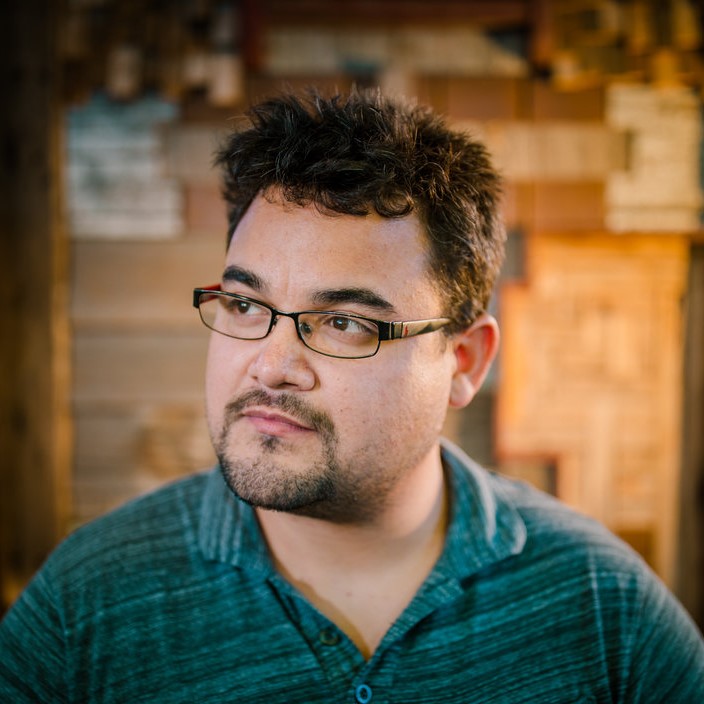
Stephen Montalvo
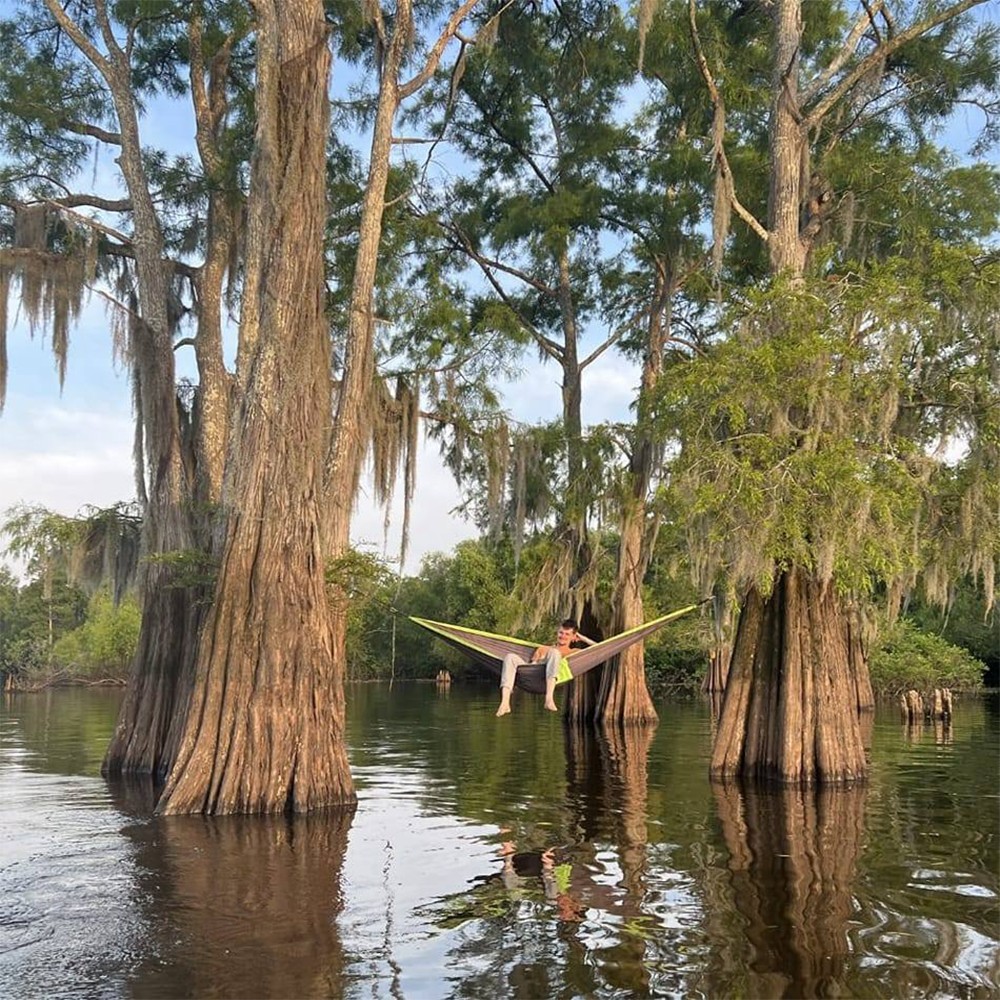
Born in 2000 in New Orleans, LA, B.K.Zervigón began composing at a young age. Often dealing with the challenges facing the Gulf Coast due to climate change and industrialization, his work seeks to create a soundscape which reflects the interplay between heavy industry and ancient, sickly nature. This Southeast Louisiana landscape seeps into his work through its often massive architectural process against intensely emotional and intuitive feeling. His output includes works for piano, retuned piano, instrumental solos, chamber works and electronic music.
Zervigón has had the privilege of studying composition under Michael Hersch at the Peabody Conservatory, and Yotam Haber at the University of New Orleans. His piano teachers include Peter Collins, Daniel Weilbacher and Rachelen Lein. He is currently pursuing a low-residency Master of Fine Arts at Vermont College of Fine Arts studying under Carla Kihlstedt and Lisa Mezzacappa. Zervigón has given guest lectures on microtonality, form and composition in the 21st century at Merrimack College and Stony Brook University. Some of his completed commissions and collaborations include those with the New York New Music Ensemble, Stony Brook University, Moscow Contemporary Music Ensemble, Ryan Muncy, Collide-O-Scope Music, the Contemporary Arts Center of New Orleans, the Ogden Museum of Southern Art, and the Historic New Orleans Collection. Additionally, Zervigón is a founding artistic director of the Alluvium Ensemble and an active piano soloist.
Acquired by LDWF in 1998, Elm Hall Wild Life Management Area is located on the northeast corner of Lake Verret; the western boundary of the WMA fronts the lake. There is an aesthetically rich, naturally flooded cypress-tupelo swamp adjacent to Lake Verret. Moving east, the elevation rises slightly toward a more bottomland hardwood area. Bayous and oilfield canals provide access and diversity to the WMA. Most of the swamp stays flooded year-round; the bottomland areas periodically flood. As oil projects have continues, the area is defined more and more by the presence of explorative industry.
Rick Snow is a composer of acoustic and electronic music and a creator of multi-modal installation work, custom instruments, and sound sculptures. His work frequently embraces generative music composition techniques applied to the use of microtonality and sound synthesis to create sonic experiences that evoke gestural, liminal, and environmental interpretations. He is a professor of Digital Media Practices and a faculty member in the Department of Music where he oversees the Music Science and Technology area. He teaches courses in Music Digital Signal Processing, Music Performance Systems, and Composition for Electronic Media in the Music Department. He also regularly oversees Engineering Senior Design Projects in the Engineering Physics program.
His work Pixel Creatures for septet with live electronics is inspired in part by sped up video montages of insects and environments. Much of the material in the piece consists of hockets of these materials.

Treya Nash is a composer and creative coder based in Baton Rouge, Louisiana. She is currently completing her PhD at Louisiana State University with Mara Gibson, Jesse Allison, and Steven David Beck. She has previously studied with Paul Koonce, Mark Engebretson, and Alejandro Rutty.
Treya has presented her work at conferences and festivals such as the Web Audio Conference, SEAMUS, Electronic Music Midwest, SPLICE.org, ACMC, Rethinking the History of Electroacoustic Music, Espacios Sonoros, and more. She has worked with ensembles such as Ensemble Vim, Popebama, Ensemble Ipse, Bent Frequency, New Music Mosaic, Hypercube, Homegrown New Music Ensemble, Camerata Temporalis, PHACE, F-Plus, the Boston String Quartet, and more. Treya’s area of focus is audience participation in the concert hall, which often involves creating web apps for cell phone use.
Please wait until instructed by the performers to begin playing with your bag of marbles! 🙂
More Frogs is an improvisational piece that can be adapted for various ensembles and instrumentations. The piece explores the nighttime soundscape of Baton Rouge, focusing on frog calls. The performers weave and blend with one another, playing with a background of field recordings. The use of marbles is inspired by the calls of cricket frogs.

Philip Schuessler’s music, ranging from soloists to orchestra, often has sense of delicate urgency and rhythmic energy that is characterized by intricate instrumental writing and subtle timbral design. He takes inspiration from a variety of sources, including popular and rock music traditions, experimental improvisation, spectralism, natural and scientific processes, and countercultural political theater.
He is currently an instructor of music theory and composition at Southeastern Louisiana University where he was honored with the President’s Award in Artistic Excellence. His music is published by his own Pendula Music publishing company, as well as Society of Composers, Inc., Alea Publishing, T.U.X. People’s Music, Murphy Music Press, and Potenza Music, and recordings of his compositions can be found on the New Focus, Centaur, Navona, Janus, Curvepoint Media, and Capstone labels. Most recently his work Splintered Refrains is featured on the upcoming Phasma Music release Viola +.
In addition to being a composer and teacher, Schuessler is also assistant director, co-founder, pianist, and conductor for Versipel New Music. Based in New Orleans and now in its tenth year, Versipel presents contemporary music concerts throughout the southern Louisiana region.
His work “Impingement I + Murmuration of Starlings” is for piano trio with Euler’s disks and fixed media. The work explores ideas of collective migratory and movement patterns in animal flocks and how those patterns are infringed upon by human encroachment and development.
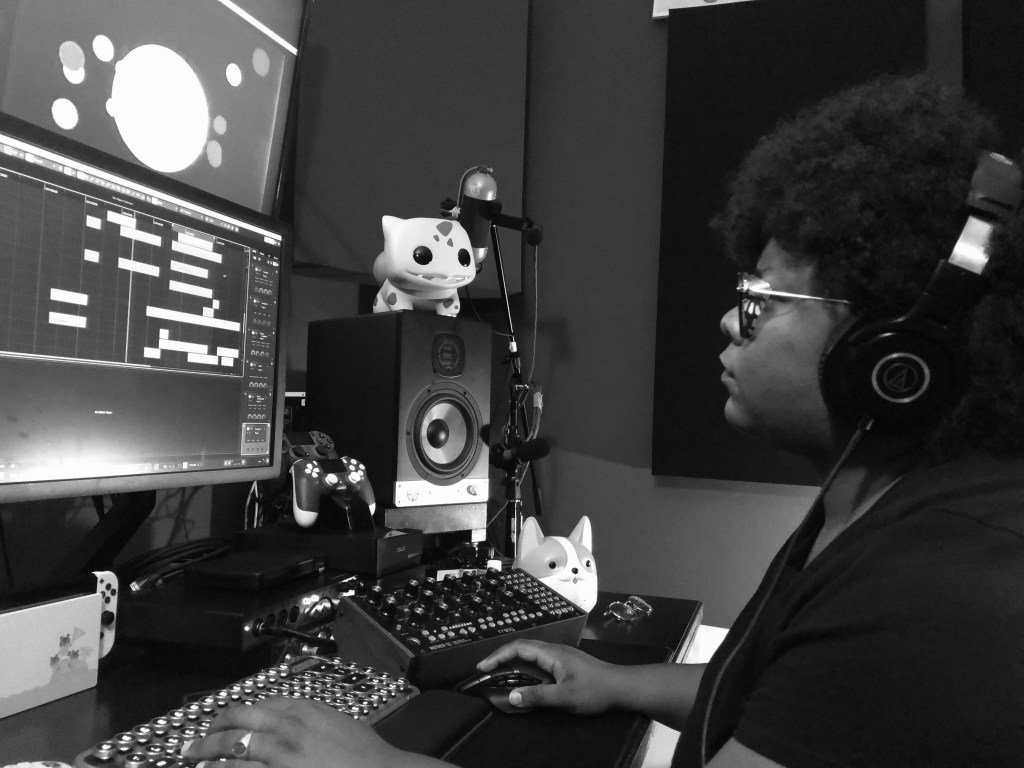
LaTasha Bundy (b. 1992) is a native New Orleanian composer and electronic music performer. Every piece of music she makes is informed in one way or another by her heritage of being from Louisiana, but also inspired by different aspects of pop-culture (anime, comics, video games, etc.). She mostly works with electronics but performed as a trumpet player for years. She has studied with musicians and composers such as Clyde Kerr Jr., Sir Edward Kidd Jordan and the Jordan Family, Roger Dickerson, Dr. Courtney Bryan, Chief Xian aTunde Adjuah, Dr. Yotam Haber, Patrice Rushen, Nicholas Payton, and Jesse McBride. She is currently working on a commission for the Fromm Foundation (Harvard University) to be completed in 2024.
Space Gator is a mix of electronic music and Zydeco, featuring accordion samples from Bruce “Sunpie” Barnes and multiple synthesizers. It was inspired by Monica Rambeau, a Marvel super hero who’s from New Orleans. She frequently is involved with intergalactic missions, so I started to call her “Space Gator.” The piece explores what those kinds of space travels would sound like.
 Versipel New Music